
It is a tribute to a system so robustly meritocratic that this team represents India's diversity better than any other institution: The Union Cabinet, our chief ministers, the civil services, the leadership of our armed forces and security agencies, the judiciary and more than all of these, our typical newsroom. That is the biggest message from this breathless rise of Indian cricket, asserts Shekhar Gupta.

There is a growing sentiment in the world and the global South in a way embodies it. But there's also political resistance, he said.
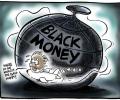
The studies found that sectors with the highest unaccounted income included real estate, mining, pharmaceuticals, pan masala, gutkka and tobacco, bullion and commodity markets, film industry, educational institutes and professionals.
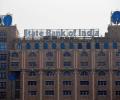
SBI Q3FY24 result review: A higher-than-factored weakness in the October-to-December quarter (Q3) results of State Bank of India (SBI), for financial year 2023-24 (FY24), has prompted brokerages to cut earnings estimates for the ongoing financial year. They, however, have maintained 'Buy' ratings on the stock, revising target price upwards in some cases, owing to the stock's recent underperformance relative to its peers.

At the outset, decide whether you want to be a trader or an investor, suggest Sarbajeet K Sen and Sanjay Kumar Singh.

Life Insurance Corporation (LIC) on Monday said it has an exposure of Rs 36,474.78 crore to Adani group's debt and equity, and the amount is less than one per cent of the national insurer's total investments.

Admittedly, EVMs too have a UID number and any convergence of data can make the secret ballot system a party of history, warns Dr Gopal Krishna in the 5th part of his series against Aadhaar.

Six decades and more later, we are now captives of our identities. Every poll is based on elaborate calculations of electability of candidates on the basis of their castes and other narrow definers. That, along with voter promiscuity, is what defines our political culture, which remains stubbornly resistant to any change, asserts Shreekant Sambrani.

Among the Sensex firms, Bajaj Finserv, Tata Motors, Asian Paints, ITC, IndusInd Bank, State Bank of India, Tata Steel, Wipro, Infosys and Maruti were the major gainers. Tech Mahindra, HCL Technologies, Kotak Mahindra Bank, Titan and Larsen & Toubro were the major laggards.

Because they have become too big and pervasive and the time to regulate is long gone, points out Debashis Basu.
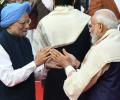
False and acrimonious debates such as Modi versus Manmohan might allow for victories that are political and partisan. But the real loser is the nation, India and Bharat, notes Arvind Subramanian, former chief economic advisor to the Modi government in its first term.

Indian society may be more advanced than we think it is, notes Ajit Balakrishnan.

Mobs killed a cleric in a late night attack on a mosque, torched an eatery and vandalised shops as communal violence that began in Haryana's Nuh spilled over into Gurugram, taking the death toll to five, the police said on Tuesday.

Morgan Stanley has increased the target prices of certain information technology (IT) stocks by as much as 29 per cent, anticipating an improvement in earnings in the near future. Within the IT and engineering research and development (ER&D) services sector, it is now more optimistic about growth and margin estimates for 2024-25 (FY25).
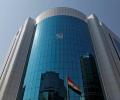
The Securities and Exchange Board of India (Sebi) is mulling changes to the 'fit & proper' criteria for market infrastructure institutions (MIIs), such as stock exchanges, in a bid to segregate the role of an individual from the entity, said sources. Under the current framework, wrongdoing by senior personnel could lead to a debarment of the MIIs such as stock exchanges, depository participants and clearing members-with quite a few such instances in the past. Additionally, Sebi is also mulling to introduce a clause through which any order passed against an MII will not affect their operations, unless it is specifically mentioned so in the order.

'Information highways are getting stronger and being strengthened.' 'Occasionally, accidents could occur. But do you stop constructing highways because two motor cars collide?'

India has a huge untapped population which doesn't have facilities for financial aid and insurance, and it is perhaps plausible to look at the option of having niche players catering to smaller sectors akin to non-banks and microfinance institutions in lending, said Rakesh Joshi, member (Finance & Investment), Insurance Regulatory and Development Authority of India (Irdai). Speaking at the Business Standard BFSI Insight Summit, Joshi said, "Today, most of our insurance companies operate at a national level. There is arguably a case for having differentiated operations, which cater to niche sectors the same way we have non-banking financial companies (NBFC) and microfinance institutions in lending." "The capital requirement for niche players may not be as large as those having national ambitions. "Enabling these niche players, which require lower capital, will enhance the penetration in areas which hitherto had not seen traction from large players," he said.

The domestic benchmark indices - the S&P BSE Sensex and the National Stock Exchange Nifty50 - had lost close to 1.5 per cent in three days recently before gaining slightly. Notwithstanding weakness and volatility, the Nifty50 has managed to hold on to the 18,000 mark, while the Sensex has managed to stay above the 61,000 level. The performance of the stocks that comprise these front-line indices remains polarised.

'Revision of the base year for both CPI and GDP are long overdue.' 'The basic data that went into the 2011-2012 series were mainly from surveys done in 2011 or earlier.' 'We have since seen the emergence of new sectors like platform-based work and online marketing.' 'The employment surveys and the consumption surveys need to reflect these adequately.'

"On space, we will be able to announce that India is signing the Artemis Accords, which advance a common vision for space exploration for the benefit of all humankind," a senior administration official said hours before the meeting between Prime Minister Narendra Modi and President Joe Biden in the Oval Office.

Leading stock exchange NSE's board has given its approval to the Central Bureau of Investigation (CBI) to prosecute its former MD and CEO Chitra Ramkrishna in the co-location scam case, sources said on Monday. The CBI was awaiting the go-ahead of the board of National Stock Exchange of India (NSE) to prosecute Ramkrishna following her arrest in March last year. She was arrested in the co-location scam nearly four years after an FIR was registered by the agency in May 2018.

The decline of over 5 per cent in PB Fintech's shares (the parent company of PolicyBazaar) in the past two days presents an opportunity for long-term investors to consider buying the stock, suggest analysts. By comparison, the benchmark S&P BSE Sensex has remained flat during the same period with a negligible gain of 40 points, or 0.06 per cent. Analysts believe that the recent selling is "overdone", as the company behind the online insurance portal remains committed to achieving profitability, and the potential threat from the government's online insurance portal, Bima Sugam, might be embellished.

The Indian startup ecosystem has lauded the inclusion of startups in the New Delhi Leaders' Declaration for the first time ever in the history of G20. Industry stakeholders say that the move will lead to easier access to capital, reduce regulatory hurdles, and may revive funding activity. The Declaration, through the Startup20 initiative, recognised startups as "natural engines of growth" and key to socio-economic transformation by driving innovation and creating employment.

Prime Minister Narendra Modi has said that India's economic growth is a 'natural by-product' of his nine-year-old government's political stability, as he expressed optimism that it will be a developed nation by 2047 with 'corruption, casteism and communalism' having no place in our national life.

The July-September quarter results of software companies in the engineering research and development (ER&D) segment were broadly in line with expectations, though there have been cuts in revenue growth guidance. While results were a mixed bag, and there are cautionary views on the near-term outlook, brokerages and global consulting firms highlight the strong growth trajectory for the sector. They expect this segment of the software sector to grow by 8-12 per cent going forward.

'With the current situation in the global job market, students come back with an added burden of educational loans.'

'Replacement of the CM with a more acceptable face may be a good start towards resolving Manipur's problem.'

Does your favourite institute feature in the list?

The real risk is that the core assumption -- that the votes for a candidate sponsored by an alliance will at least equal the sum total of its parts -- proves to be facile, observes T N Ninan.
In the context of market integrity, the IRAI and RBI should go over the minutes of the LIC and SBI board meetings when the decisions to invest in Adani equity or debt were taken, notes Jaimini Bhagwati, former World Bank treasury professional.

'We cannot leave our entire unorganised sector to the vagaries of market forces.'
India VIX has been mirroring the CBOE Volatility Index.
Asian shares ended higher after a string of positive US economic data.
'Their role model is Iran: high control of the citizens by the State.' In Iran it is Islamic control; in India, it will be Hindutva control.'

The latest circular from BSE that sought to cap the price movement of select scrips, especially the mid-, small-cap segments, traded on the exchange is not without a reason. A quick calendar year-to-date price check on the stocks from the categories put under 'Add-on Price Band Framework' by the BSE reveals a total of 210 stocks have seen their market price more than double. Among individual stocks, SC Agrotech, Adinath Textiles, Waaree Renewable Technologies, Steel Strips Infrastructure, Unistar Multimedia, Texel Industries, Raja Bahadur International and Hindustan Everest Tools from the BSE's X and XT group have rallied over 500 per cent during this period. Topping the charts is Gita Renewable Energy, which has zoomed 3,964 per cent to Rs 272.35 now from Rs 6.7 as on December 31, 2020.

'NSE has thousands of employees. It is their institution. So it's a dear family.' 'One should not hurt the morale of these people.'

US short seller Hindenburg Research has rejected Adani Group's charge that its report was an attack on India, saying a "fraud" cannot be obfuscated by nationalism or a bloated response that ignored response to key allegations. Commenting on the 413-page response Adani Group released late on Sunday evening in response to its report, Hindenburg said it believed India was a vibrant democracy and an emerging superpower with an exciting future and it was Adani Group which was holding it back through "systematic loot". Hindenburg stood by its last week's report that said its two-year investigation found Adani Group "engaged in a brazen stock manipulation and accounting fraud scheme over the course of decades".

Experts believe the market will fall between 1 and 3%.

In terms of value, this translates into more than Rs 300 crore (Rs 3 billion) of delivered quantity.

Taiwan considers itself a sovereign state -- but China views the self-ruled island as a breakaway province. Beijing has not ruled out the possible use of force to achieve unification.
 © 2026 Rediff.com - Advertise with us - Disclaimer - Privacy Policy - Sitemap - Feedback - About us - Terms of use - Grievances